
Services · Flagship
Period restoration & listed buildings
Lime plaster, peg tiles, oak frame, listed-building consent navigated.
Call 07768 056143Mon–Sat, 8am–6pm- Areas covered
- Rolvenden, Tenterden, Cranbrook, Hawkhurst, Biddenden & the wider Weald.
- Typical lead time
- 4-16 weeks from quote to start, depending on scope and consents.
- Trading since
- October 2002 · Companies House #04561027.
About this service
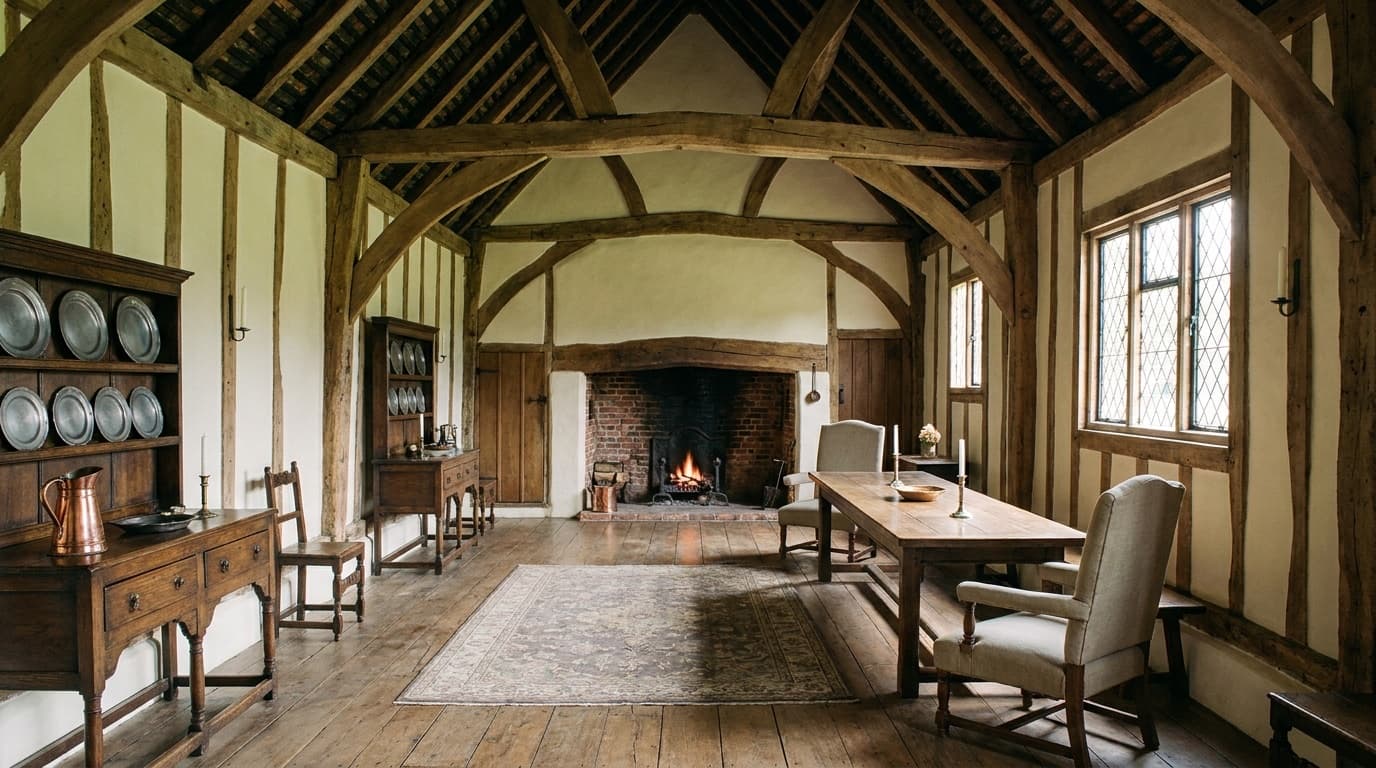
Our flagship work. Grade II listed cottages, weatherboarded barns, oast conversions. We've handled conservation officers, sourced reclaimed materials, and matched lime mortars across the Weald for over twenty years.
Our flagship discipline
Period restoration is the work we have done longest and care about most. The Weald has one of the densest concentrations of late-medieval and early-modern timber-framed buildings in England — Wealden hall houses, weatherboarded farmhouses, oast houses, and Grade II listed cottages line every road we drive on between Rolvenden and Tenterden. Looking after them properly takes a different toolkit to standard contract building.
We've worked on Grade II listed cottages, listed weatherboarded barns brought back into residential use, lime-rendered brick chimneys rebuilt without disturbing original flashing, and oast roundels re-roofed with reclaimed peg tiles. The shared thread is patience, breathable materials, and a working relationship with the local conservation officers that goes back twenty years.
What "period" means in the Weald
The dominant historic typologies around Rolvenden, Tenterden, Cranbrook, Hawkhurst and Biddenden are Wealden hall houses (late 14th to early 16th century, jettied first floor, central open hall now usually floored over), close-studded timber frames with brick infill (16th to 17th century), weatherboarded farmhouses (17th to 19th century, originally oak frames clad in painted softwood), and oast houses (mostly Victorian, with the distinctive conical roundels and cowls).
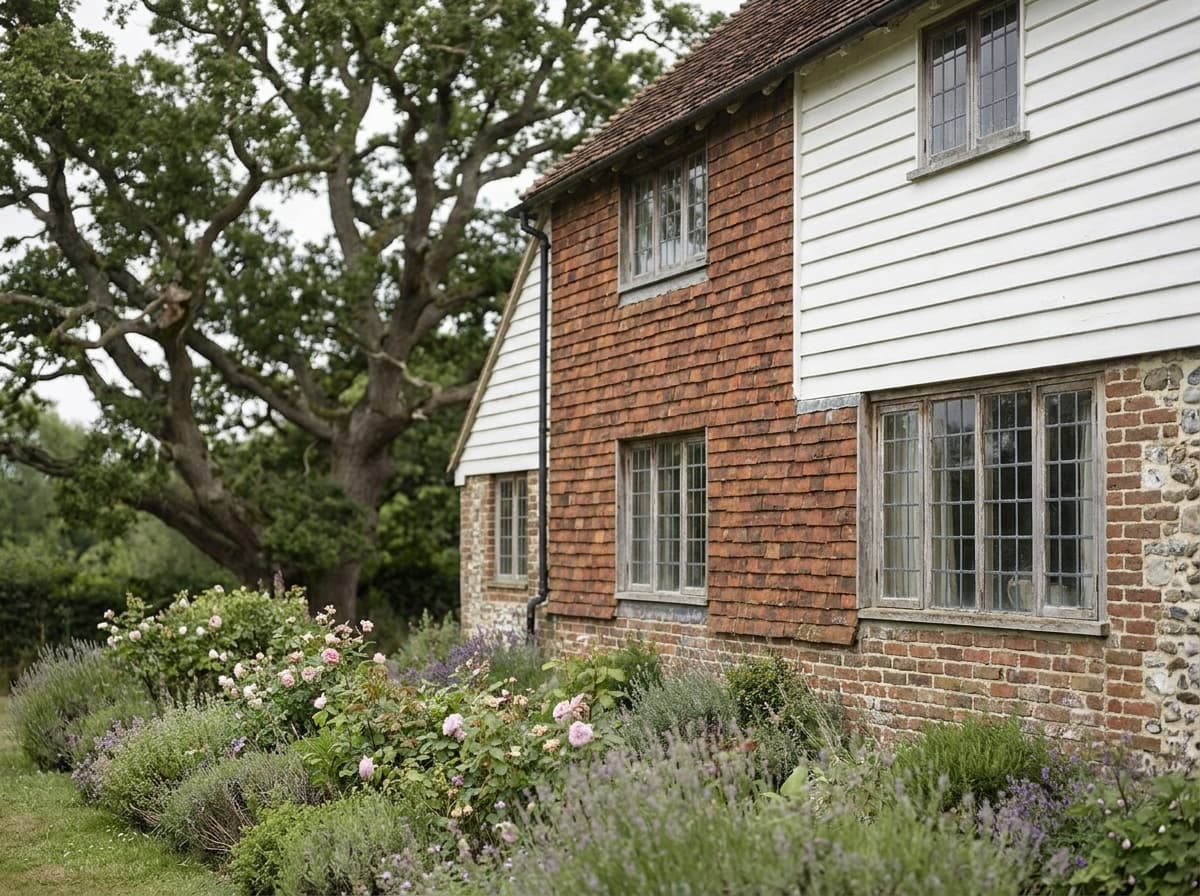
Roofs are clay peg tiles or plain tiles bedded on torching, often with a Kent peg detail at the eaves. Walls are either close-studded oak with lime hair plaster on riven oak lath, soft red brick laid in lime mortar, or hung tiles (mathematical or fishtail) on softwood battens. Almost every original fabric detail on these buildings is vapour-open — meaning moisture moves through the wall and dries out — and any modern intervention that introduces cement, gypsum, plastic membranes, or rigid foam against the historic skin will cause damp and decay within a few years.
Working with conservation officers and Historic England
Listed Building Consent is required for any work — internal or external — that affects the character of a listed building. The application is separate from planning permission, and it's a criminal offence to carry out works without it. We've taken many applications through the conservation departments at Ashford Borough Council, Tunbridge Wells Borough Council and Folkestone & Hythe District Council, and we know which officers respond to which kinds of justification.
For Grade I and Grade II* properties (rare around here but they exist — Biddenden has several Grade I cloth halls), Historic England is a statutory consultee. On those, we'd usually engage a heritage consultant early to write a Heritage Impact Assessment with us. For Grade II we can often handle the application directly with the conservation officer, particularly where the proposal is like-for-like repair or sympathetic re-introduction.
Pre-application advice is almost always worth the £150-£400 fee. It saves months of revision later, and lets the officer raise concerns in private rather than having to refuse a published application.
Lime, oak, peg tiles, secondary glazing — the canonical fabric
Lime mortars and plasters are the right material almost everywhere on a period building. NHL 2 or NHL 3.5 (natural hydraulic lime) for bedding bricks and stones in less exposed locations; lime putty haired with goat or horse hair for plastering oak laths internally; hot-mixed lime for repointing original brickwork. We mix on site or order from St Astier — we don't substitute with bagged Mastercrete, ever.
Oak frame repairs use green European oak, pegged with riven oak pegs (not steel), and either splice-joined to existing timbers or scarfed in. We source from Border Hardwoods or English Woodlands depending on section. For peg tile roofs we use reclaimed Kent peg or Aldershaw new where reclaimed isn't available — usually two-thirds reclaimed and one-third new is a good blend that re-uses the existing tiles where they're sound.
On windows: secondary glazing (Storm or Selectaglaze) is almost always the right answer over replacement, both for thermal performance and to retain original glass. Where casements have rotted beyond repair we replicate them in slow-grown softwood with single-glazed crown glass to match the surviving examples on the elevation. Modern double-glazing in a listed casement is usually refused at consent.
Typical scope and budget bands (2026)
Sensitive sash- or casement-window restoration on a Grade II cottage (full overhaul, draught-stripping, secondary glazing throughout): £18,000-£45,000.
Lime repointing of a brick elevation, scaffold included: £8,000-£25,000 depending on elevation size and access.
Full re-roof in reclaimed and new peg tiles, including timber repairs and lead flashings: £35,000-£90,000.
Whole-house listed-building restoration (services, lime plaster throughout, joinery, roof, kitchen and bathroom): £250,000-£600,000 depending on size and specification.
Listed barn conversion to residential use (structural repair, insulation strategy that respects vapour-open detailing, services from scratch, kitchen and bathrooms): £400,000-£900,000.
How a listed-building project runs
Measured survey of the existing fabric, sometimes including a dendrochronology sample where we need to date a frame. Schedule of works written against the survey. Pre-app meeting with the conservation officer where useful. Listed Building Consent application (eight to thirteen weeks with the local authority). Once consent is granted, scaffold goes up, opening-up surveys confirm what we found at pre-app, and we proceed in close coordination with the officer if there are any in-flight changes.
Stage payments are tied to physical milestones, not calendar months — the work moves at the pace the building allows. Snag list, certificates, listed-building completion notice. We keep a photographic record throughout which sits in the building's file for future owners.
Recent period restoration & listed buildings
Examples from across the Weald.
Planning a project?
Let's talk about what you're building.
Tell us about your project — extension, refurb, listed-building work, new build, anything in between. We'll come and have a look, talk it through, and put together a quote.