
Services
Extensions
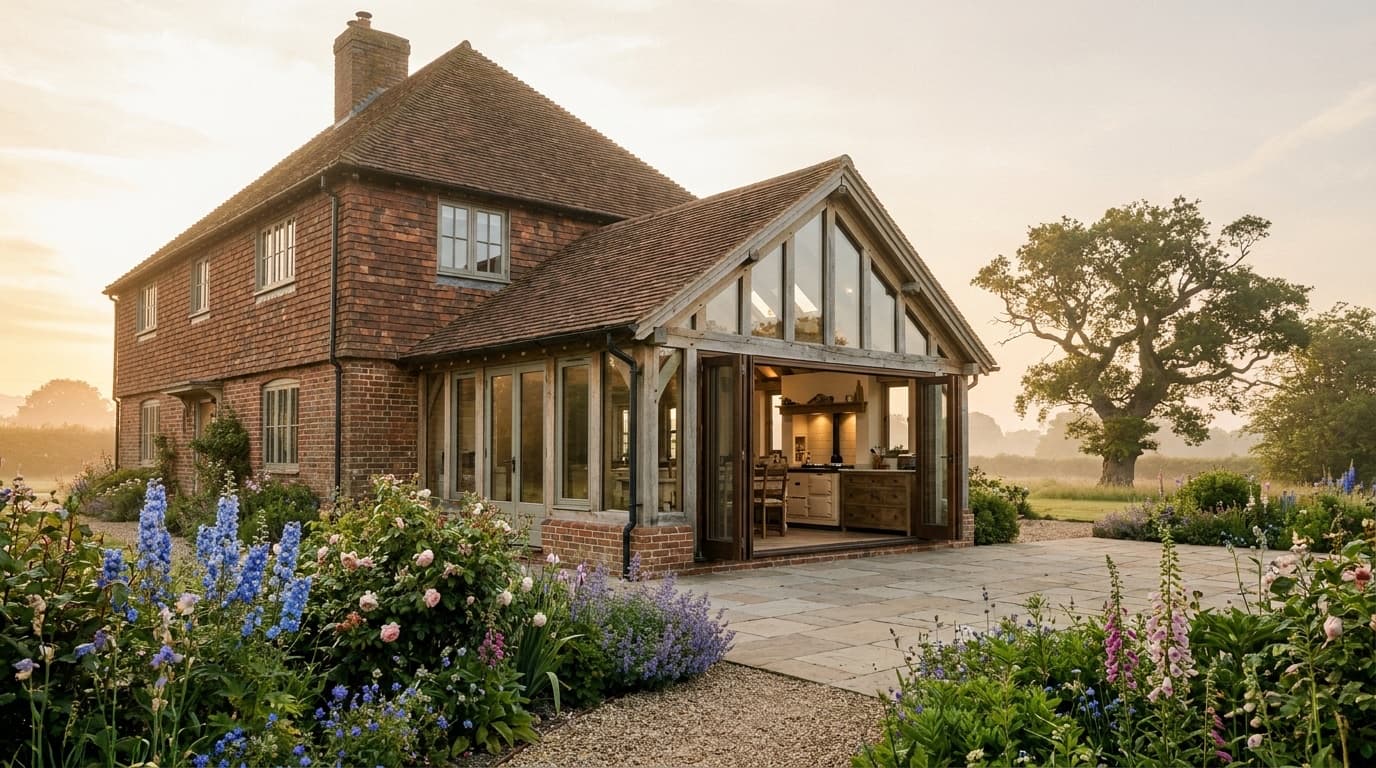
Single-storey, side-return, wraparound, two-storey.
Call 07768 056143Mon–Sat, 8am–6pm- Areas covered
- Rolvenden, Tenterden, Cranbrook, Hawkhurst, Biddenden & the wider Weald.
- Typical lead time
- 4-16 weeks from quote to start, depending on scope and consents.
- Trading since
- October 2002 · Companies House #04561027.
About this service
We build extensions on Wealden homes from small kitchen openings to two-storey rear builds, working alongside your architect or starting from a brief.
Building extensions in the Wealden vernacular
Most of the extension work we do sits inside the High Weald National Landscape (the new statutory name for the AONB, since the Levelling-up and Regeneration Act 2023). The houses are weatherboarded cottages, brick-and-tile farmhouses, Georgian frontages along the High Streets of Tenterden and Cranbrook, and post-war family homes south of the conservation lines. Each has its own rules about what reads as honest and what reads as bolted-on.
We build alongside your architect when there is one, and from a brief when there isn't. Almost every extension we complete in the area passes through the local planning authority — Ashford Borough Council, Tunbridge Wells Borough Council, or Folkestone & Hythe District Council depending on the postcode — and most of them sit inside a conservation area, a designated landscape, or both.
What we build most often
Single-storey rear extensions are the everyday job — typically replacing a tired lean-to or opening up a dark Victorian back-room to bring kitchen, dining and garden into one volume. Side-return infills on terraced and semi-detached cottages add three to five square metres without altering the roofline. Wraparound extensions (rear + side combined) work well on detached farmhouses where the existing kitchen sits in a single-storey outshut.
Two-storey rear extensions are less common in the conservation areas — planning officers tend to push back on anything that competes with the original building's massing — but we've completed several outside the strictest streets, usually as a master suite plus expanded kitchen below. Two-storey side extensions on outlying houses can almost double a small cottage, where the planning conditions allow.
Planning and conservation context
Permitted-development rights are restricted in conservation areas and on Article 4-direction streets, which covers most of central Tenterden, Rolvenden, Cranbrook and the Biddenden High Street. In practice this means a full householder planning application is needed for almost any extension beyond a small porch.
The High Weald National Landscape Management Plan 2024-2029 sets out the materials and forms that the planning authorities expect: weatherboarding (painted black or off-white), peg-tile or plain-tile roofs, slim-section painted timber casements, and roofs pitched at 45° or steeper to match the local vernacular. UPVC windows and box-profile metal roofing are routinely refused on conservation-area extensions.
We can run the planning application for you, but most of our clients come with an architect or designer already engaged — we work with them through pre-app, validation, and conditions discharge.
Materials and finishes that age in
On period properties we use lime-bedded brickwork on plinths and chimney rebuilds, sourcing peg tiles and clay plain tiles from Aldershaw or Keymer to match existing pitches. New oak frames go in green and weather to silver-grey within two seasons; if you want a faster-weathered look we can specify a pre-aged finish.
On glazing, slim-profile aluminium-clad timber casements (Velfac, Idealcombi) keep the proportions delicate while meeting current Part L thermal requirements. For the rear-glazing extension brief, structural glass with no transom is achievable in spans up to about 4 metres — beyond that you need a steel goalpost or oak frame, which we'd discuss at design stage.
Typical budgets in the Weald (2026)
Small single-storey rear extension, 12-20 sqm, mid-spec finish: £55,000-£95,000. Larger rear or wrap-around, 25-40 sqm with structural glazing and an integrated kitchen: £95,000-£180,000. Two-storey rear or side extension on a period property: £160,000-£300,000 depending on roof complexity, listed-building requirements, and whether internal alterations are part of the scope.
All figures exclude VAT, professional fees (architect, structural engineer, planning consultant where needed), and kitchen fit-out beyond the carcasses. We give a fixed quote against a tendered specification, not a square-metre rate, because Wealden ground conditions and listed-building constraints make rule-of-thumb numbers unreliable.
How a project runs
First call — usually fifteen minutes on the phone to understand scope. Site visit within a week or so, no charge, no obligation. Written quote against your drawings (or against a brief if you don't have drawings yet). Once accepted, we lock in a start date, agree a stage-payment schedule, and put a contract in place using either JCT Minor Works or our own short-form letter agreement for smaller jobs.
On site we run our own trades — bricklayers, carpenters, roofers — and bring in M&E (electrical, plumbing, heating) subcontractors we've worked with for years. Weekly progress on a single-storey rear is typically eight to twelve weeks on the tools; larger or listed work runs longer. Final snag, certificates, building-control completion, handover.
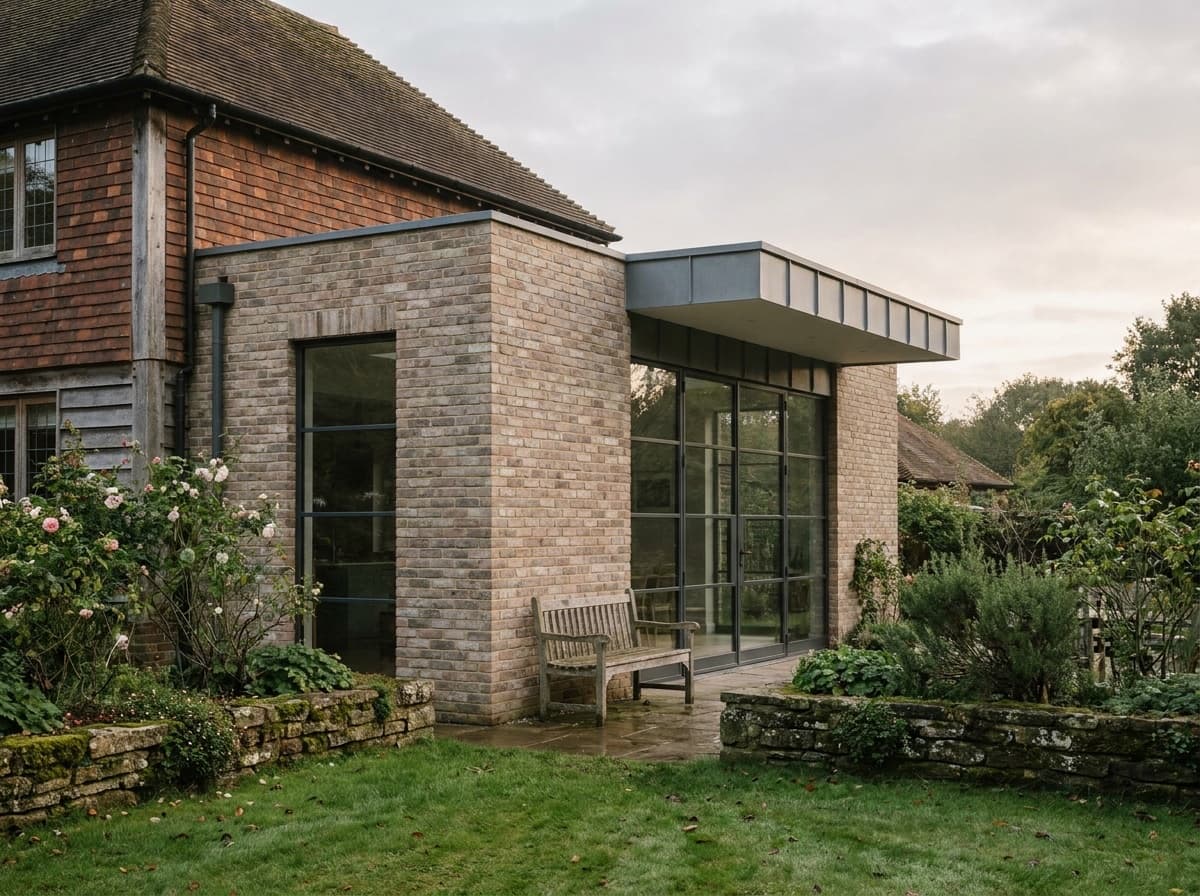
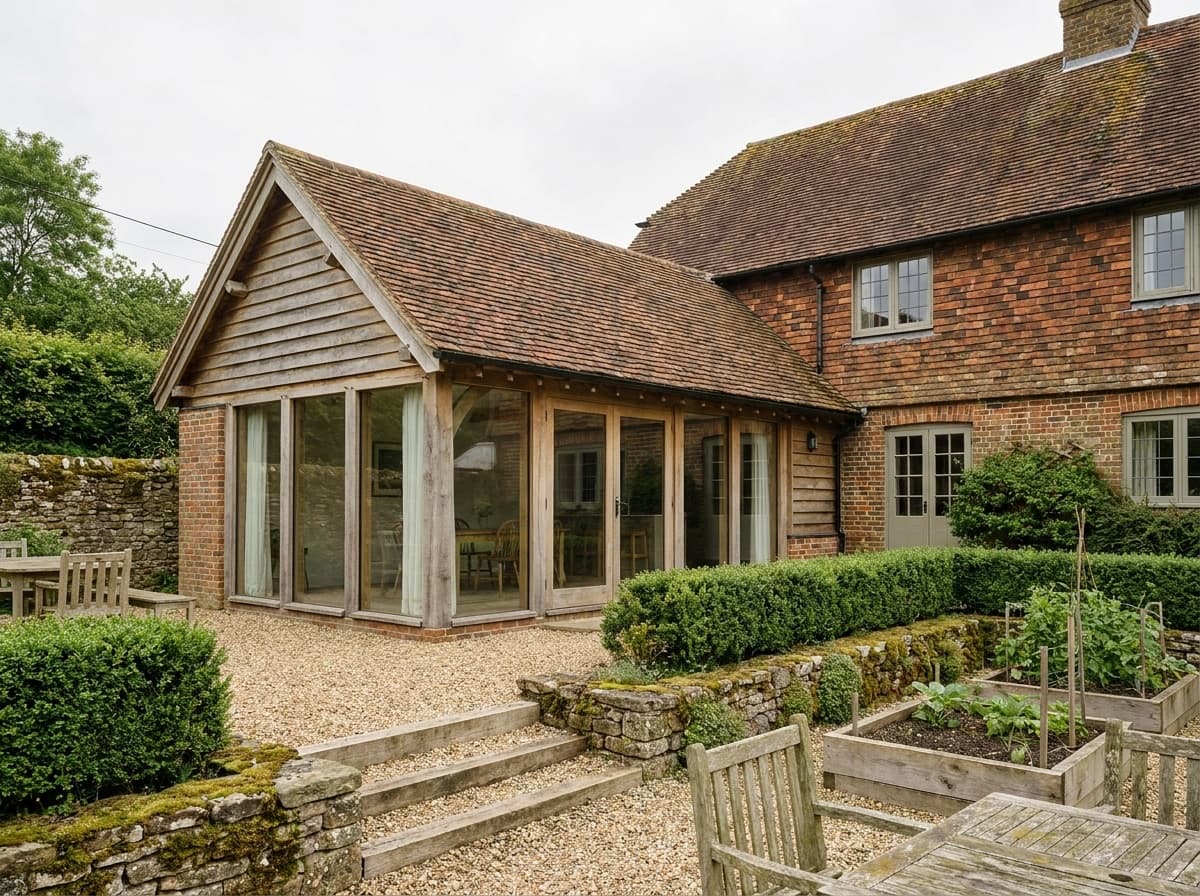
Recent extensions
Examples from across the Weald.
Planning a project?
Let's talk about what you're building.
Tell us about your project — extension, refurb, listed-building work, new build, anything in between. We'll come and have a look, talk it through, and put together a quote.