
Services
Outbuilding restoration
Barns, oasts, stables, garden rooms.
Call 07768 056143Mon–Sat, 8am–6pm- Areas covered
- Rolvenden, Tenterden, Cranbrook, Hawkhurst, Biddenden & the wider Weald.
- Typical lead time
- 4-16 weeks from quote to start, depending on scope and consents.
- Trading since
- October 2002 · Companies House #04561027.
About this service
Bringing redundant Wealden barns and oasts back into use — habitable conversions, garden rooms, garages — preserving the agricultural fabric.
Bringing redundant outbuildings back into use
The Wealden countryside has more redundant barns, oasts, cart sheds and small agricultural buildings than almost anywhere in England. Most of them were built between 1700 and 1900 and most of them aren't earning their keep anymore. We've spent twenty years bringing these back into use — sometimes as habitable extensions of the main house, sometimes as garden rooms or studios, sometimes as garages or storage, sometimes as full residential conversions under Class Q or full planning permission.
Class Q, full planning, listed-building consent
Class Q permitted-development conversion of agricultural buildings to residential is the fastest route where it applies — but the rules are strict. The building has to have been in agricultural use on or before March 2013 (Class Q can't be used to convert a building that was already residential or had stopped being agricultural). It has to be "capable of conversion" without significant rebuilding — meaning the existing walls and roof have to be structurally sound. Up to five dwellings or 1,000 sqm. Article 4 directions in some parishes remove Class Q rights.
Where Class Q doesn't apply (most listed barns, anything in a more recent agricultural use, buildings needing significant rebuild) the route is a full planning application, usually with a strong design and heritage case. Listed barns additionally need Listed Building Consent for any change to the historic fabric.
Working with original fabric
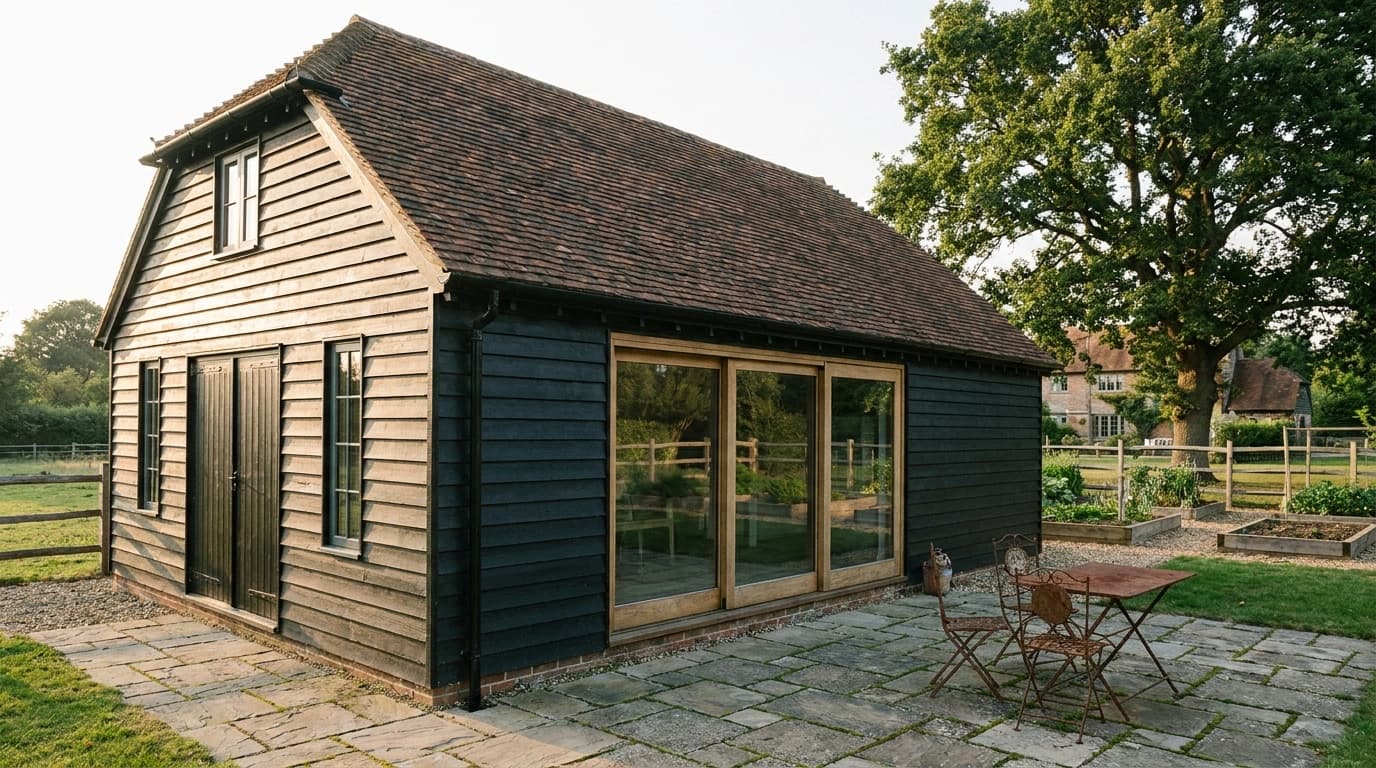
Most of the barns we work on are timber-framed with weatherboarded skin and a peg-tile roof. The frame is usually sound (oak doesn't really decay below the breather line) but the sole plates, sill beams and the bottom 1-2m of cladding are often shot. We splice in replacement oak to existing scarves, replace sill beams in green oak, and re-clad with slow-grown softwood weatherboards pre-painted in linseed-oil paint.
Roofs we re-bed and re-tile, reclaiming as many of the original peg tiles as we can. Internally we insulate with breathable woodfibre or sheep's wool to keep the wall structure vapour-open — never with rigid PIR boards or polythene membranes against a historic timber frame, which is the single most common cause of post-conversion decay.
Lime plaster (where original was lime) or natural-fibre boarding (where new finishes are wanted) goes on the inside. Floors are typically suspended timber over a ventilated subfloor; we resist the temptation to pour concrete slabs against historic walls, which traps moisture and pushes damp up.
Habitable conversions vs garden rooms vs garages
Habitable conversion (kitchen, bathroom, heating, full insulation, building-regs compliance) is the most involved and most expensive route — but it adds the most value and the most usable space. Typical budget for a 100-150 sqm timber barn conversion to a single-dwelling residential unit, including services from scratch: £400,000-£900,000.
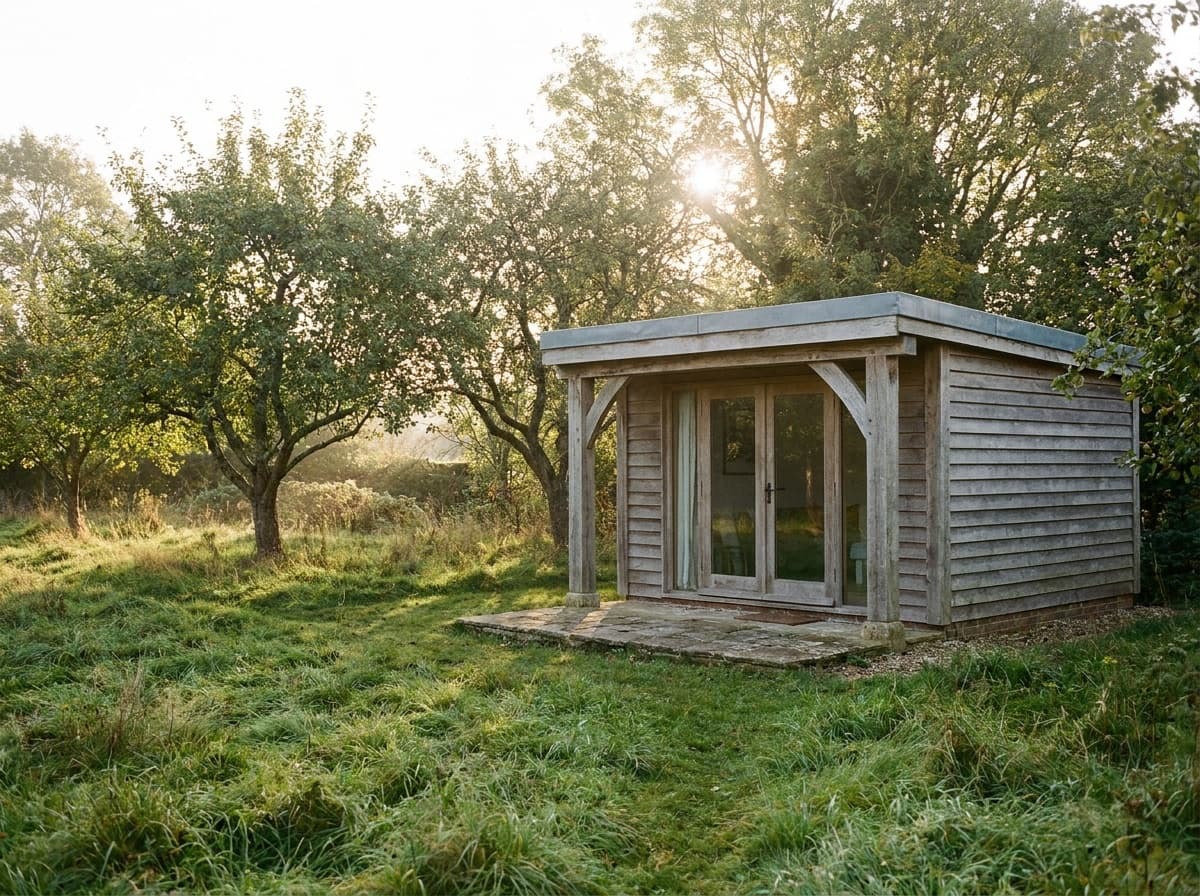
Garden rooms and studios — heated, insulated, electrically serviced, but not a fully self-contained dwelling — are simpler. Typical budget for a 30-60 sqm timber garden room with bi-fold doors, woodfibre insulation, plumbing for a WC, and a small kitchenette: £55,000-£140,000.
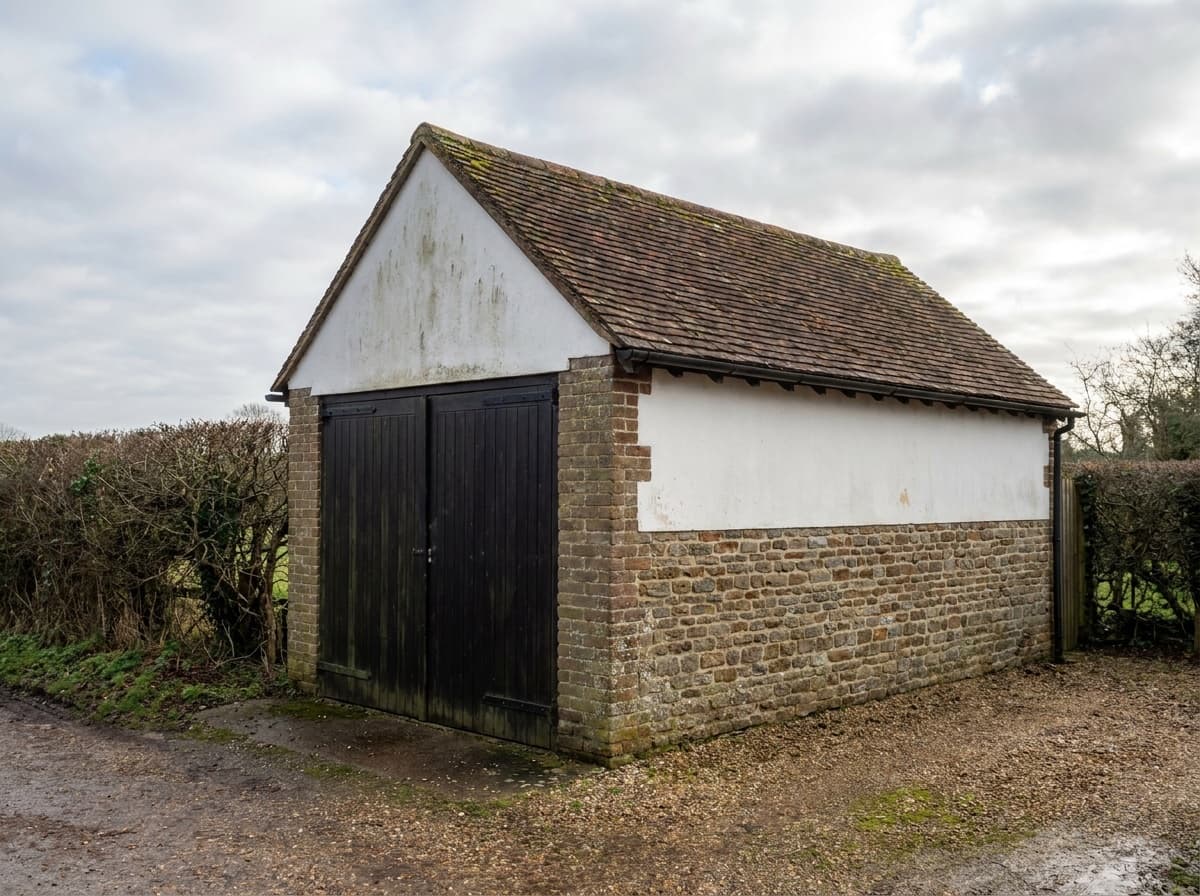
Garages and storage conversions — re-roof, re-clad, new floor, electrics, sometimes a roller door — are the simplest. Typical budget £25,000-£70,000.
Typical Weald budgets (2026)
Light restoration of a sound timber barn (re-clad, re-roof, repair frame, no internal conversion): £40,000-£110,000.
Garden room or studio conversion (heated, serviced, single-room use): £55,000-£140,000.
Single-dwelling habitable conversion under Class Q or full planning: £400,000-£900,000.
Listed barn conversion to residential, full restoration: £500,000-£1,200,000+.
How a barn project runs
Visit and condition survey — usually two hours on site, focusing on the frame, sill beams, roof structure, and any obvious structural movement. Feasibility note covering planning route, likely consents, services availability, and a budget range. Engagement of an architect and (for listed work) a heritage consultant. Planning and Listed Building Consent applications. Tender against measured drawings. Build phase typically eight to eighteen months on site depending on scope.
Recent outbuilding restoration
Examples from across the Weald.
Planning a project?
Let's talk about what you're building.
Tell us about your project — extension, refurb, listed-building work, new build, anything in between. We'll come and have a look, talk it through, and put together a quote.