
Services
New builds
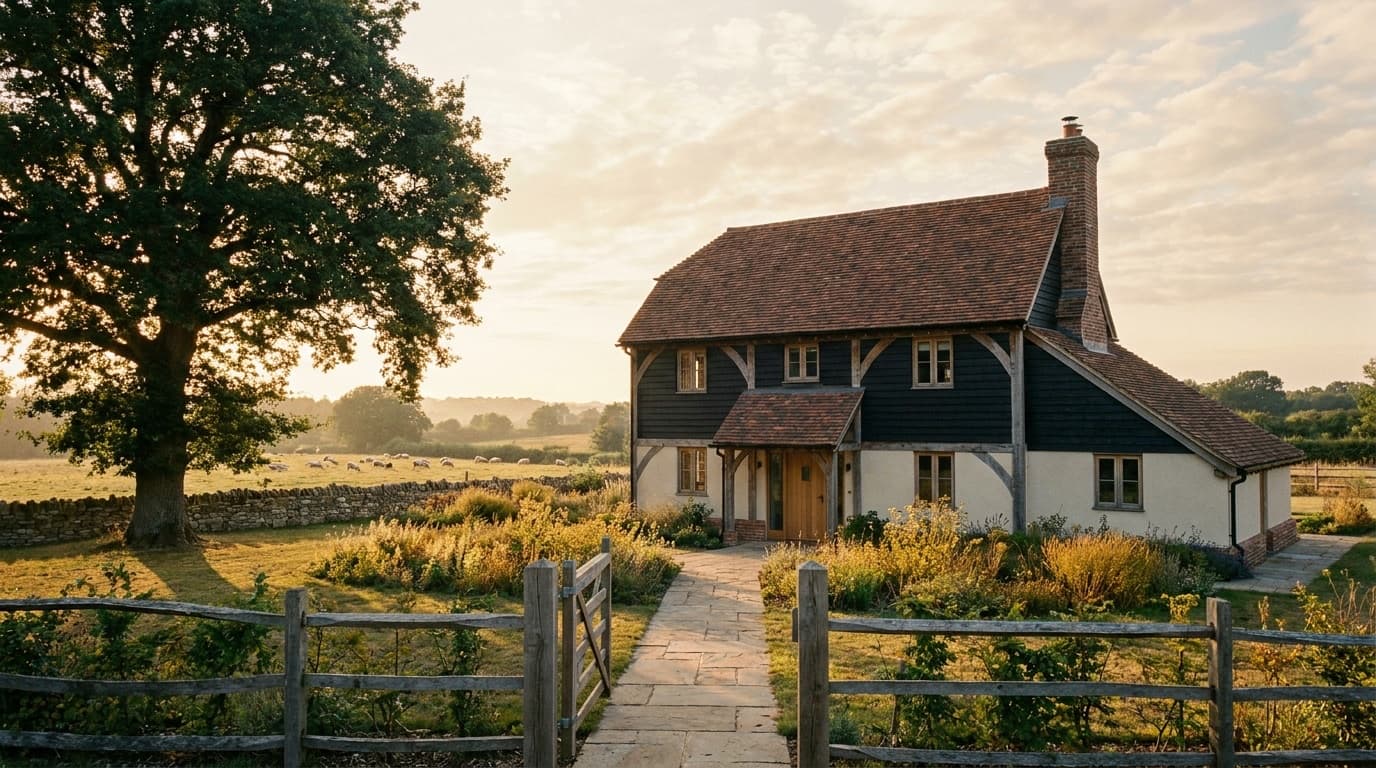
Bespoke new build on outlying farmland.
Call 07768 056143Mon–Sat, 8am–6pm- Areas covered
- Rolvenden, Tenterden, Cranbrook, Hawkhurst, Biddenden & the wider Weald.
- Typical lead time
- 4-16 weeks from quote to start, depending on scope and consents.
- Trading since
- October 2002 · Companies House #04561027.
About this service
Rare in the conservation area but possible on outlying farmland — we've completed new builds in traditional Wealden vernacular and contemporary styles.
New builds in the Weald — rare, but possible
Brand-new houses inside the conservation lines of Rolvenden, Tenterden, Cranbrook, Hawkhurst and Biddenden are rare — the planning bar for additional dwellings is high, especially inside the High Weald National Landscape. The routes that do exist are replacement dwellings on existing residential plots, agricultural-tie houses where a justified need is established, and the very narrow gates of NPPF paragraph 84 (formerly 80) for exceptional design.
Outside the conservation areas, on outlying farmland and small infill plots, new builds happen more often, and we've completed several — some in traditional Wealden vernacular (timber frame, weatherboarded, peg tile roof), some in a contemporary architect-led idiom.
Wealden vernacular vs contemporary
When the planning context calls for vernacular, we build to that brief properly — oak frame from green English oak, riven oak pegs, weatherboarding in slow-grown softwood pre-treated with linseed-oil paint, peg-tile roof, lime-bedded brick chimney, slim-profile painted-timber casements. Done well, a vernacular new build is indistinguishable from a 1850s farmhouse after ten years of weathering.
When the brief is contemporary, we build to that brief too — concrete plinths, larch cladding, large structural glazing, standing-seam zinc or slate roofs, MVHR, air-source heat pump, high U-value envelope. The High Weald management plan accepts contemporary architecture where the design is exceptional and the materials are honest; some of the most successful recent new builds in the Weald have been contemporary, not pastiche.
Planning routes that actually work
Replacement dwellings — knocking down a tired bungalow or 1960s house and building something better — are the most common new-build route in the conservation area. Volume increases are usually capped at 30-40% over the original footprint and the new design must respect the site context. We've taken several of these through pre-app and full application.
Para 84(e) (formerly Para 80(e)) houses — "exceptional architecture in an isolated location" — are very hard to win but they do happen. They need a heritage and design case argued by a planning consultant from day one, and an architect with a track record of similar consents.
Class Q permitted-development conversion of agricultural buildings to residential is a separate route — strictly speaking it's a conversion not a new build, but the practical outcome is similar. Tight rules on which buildings qualify; we've helped several owners assess viability.
Site selection, groundworks and services
Wealden clay is the dominant ground condition across most of our patch and it dictates the foundation strategy. Strip footings rarely work; usually it's deep trench-fill or pile-and-beam, and on poor ground or close to mature trees you can be down to 2.5-3m depth. A site investigation with two or three trial pits is non-negotiable before pricing.
Mains services in outlying locations can be a significant cost — water mains, electricity, fibre and a connection to mains drainage (or a Klargester / Biorock package treatment plant if no main is available) can run £30,000-£80,000 before the foundations go in.
Typical Weald budgets (2026)
Replacement dwelling, traditional vernacular, 200-280 sqm, mid-spec: £550,000-£900,000 (build cost only, excluding land, planning, demolition, services).
Contemporary architect-led new build, 220-320 sqm, high specification (MVHR, ASHP, structural glazing, bespoke joinery): £900,000-£1,800,000.
Para 84 / one-off house with significant design contribution: budgets are bespoke — typically £1.2m-£3m+ for the build, often more for the design and consent phase.
How a new build runs
Feasibility — site visit, pre-app discussion with the planning authority, assessment of services and ground conditions. Design phase — architect, structural engineer, M&E consultant, ecologist (bats are common around here), heritage consultant if the context demands. Planning application. Building regulations and SAP calculations. Tender against detailed drawings. We build under JCT Intermediate or JCT Standard depending on size.
On site, construction phase is typically 14-24 months for a vernacular family house, 18-30 months for a more complex contemporary build. We run weekly site meetings with the architect and client, with formal stage-payment certificates issued by the contract administrator.
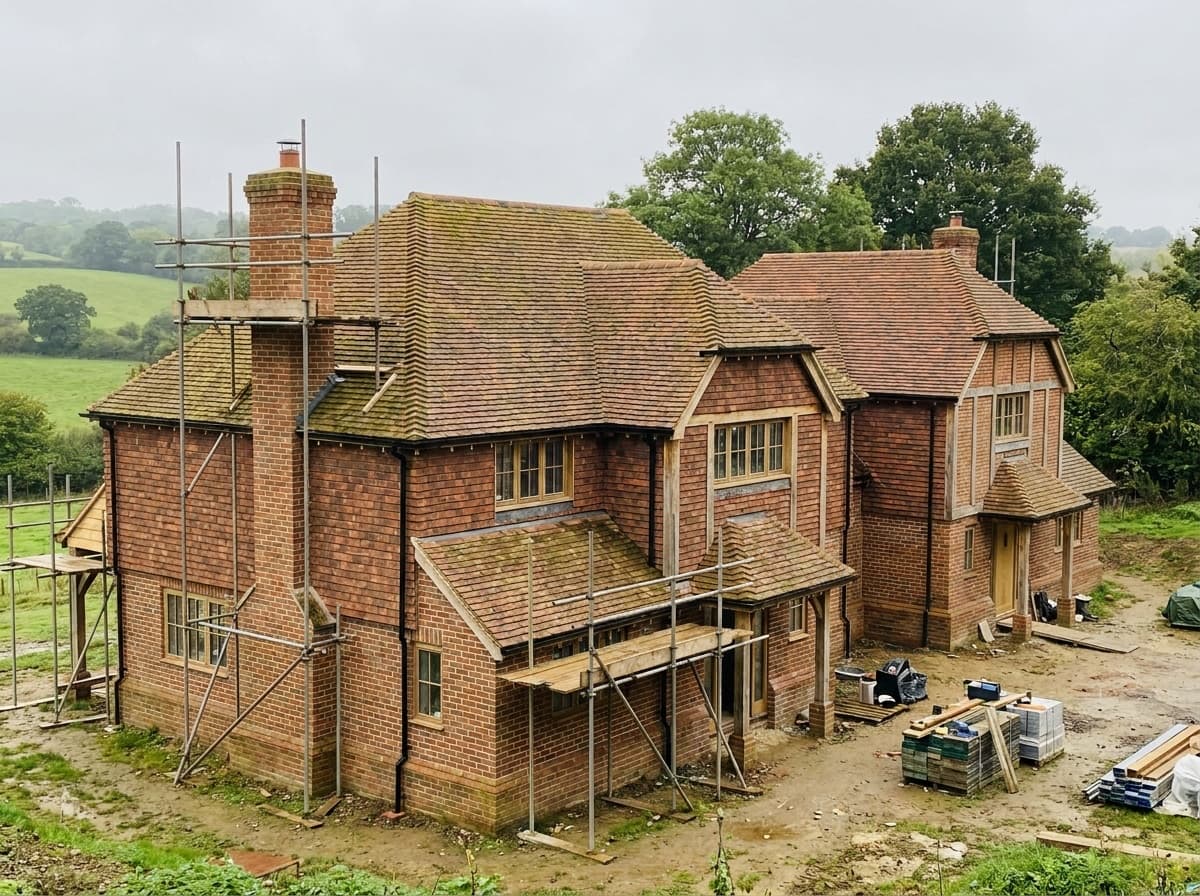
Recent new builds
Examples from across the Weald.
Planning a project?
Let's talk about what you're building.
Tell us about your project — extension, refurb, listed-building work, new build, anything in between. We'll come and have a look, talk it through, and put together a quote.